Forgings from 20 kg to 50 tonnes
Open-die and closed-die forgings from audited production in Europe and Asia — from drawing to ready-to-install component.
Forgings are formed while the material is in a plastic state. Unlike casting, the grain flow is preserved and follows the contour of the part. The result is a dense, pore-free structure with substantially higher toughness and fatigue strength. That is precisely why safety-critical components in plant engineering, power generation and machinery are forged rather than cast.
INTEG supplies forgings from 20 kg to 50 tonnes per piece. We do not run our own forge — for over 50 years we have worked with a qualified network of forging plants across Europe and Asia. For you that means one point of contact, one contract, one continuous quality assurance chain, and the freedom to pick the technically and commercially right shop for every part.
Technical data
| Piece weight | 20 kg – 50 t |
|---|---|
| Processes | Open-die forging, closed-die forging, ring rolling |
| Materials | Structural, quenched and tempered, case-hardening, tool and stainless steels |
| Heat treatment | Normalising, quenching and tempering, stress relieving, solution annealing |
| Machining | As-forged, rough-machined, pre-machined or ready to install |
| Testing | UT, MT, PT to EN 10228, tensile, impact and hardness testing |
| Certificates | EN 10204 3.1, 3.2 with third-party inspection on request |
These are typical manufacturing ranges within our supplier network. Larger dimensions and special materials on request — send us your drawing.
Materials
- S355J2+N (1.0577)
- C45 (1.0503)
- 42CrMo4 (1.7225)
- 34CrNiMo6 (1.6582)
- 18CrNiMo7-6 (1.6587)
- 16Mo3 (1.5415)
- 1.4404 / 316L
- 1.4462 duplex
Manufacturing and quality assurance
- Material and process selection together with your engineering team — including alternatives where a different grade is cheaper or better available.
- Billet layout and, for complex geometries, forming simulation before production release.
- Heat treatment with documented furnace charges and time-temperature records.
- Non-destructive testing to EN 10228 (UT, MT, PT); scope and acceptance class agreed before the order starts.
- Inspection certificate 3.1 to EN 10204 as standard; 3.2 inspections by TÜV, SGS, Lloyd's or your own inspector arranged on request.
Typical applications
- Boiler and pressure vessel construction
- Power generation and turbine engineering
- Valves and pipeline equipment
- Extruders and plastics machinery
- Mining and crushing equipment
- General machinery and plant engineering
Our product range
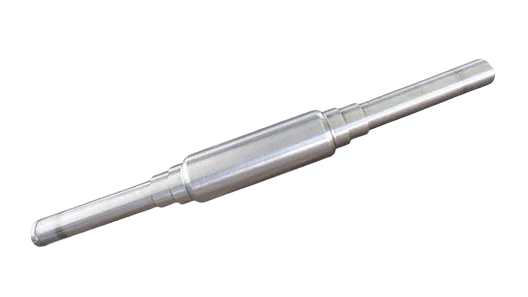
Forged shafts
Forged shafts up to 12 m long — from as-forged blank to ready-to-install drive shaft with documented testing.
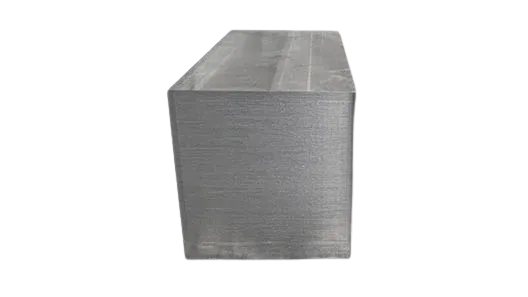
Forged blocks
Forged blocks, plates and square sections with a defined reduction ratio — the basis for tools, moulds and large components.
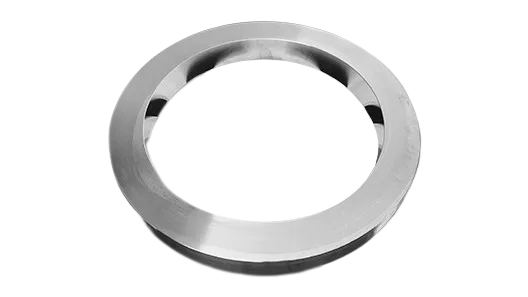
Forged rings
Seamless rolled and open-die pierced rings from 20 kg to 25 t — for bearing seats, flanged joints and turbine components.
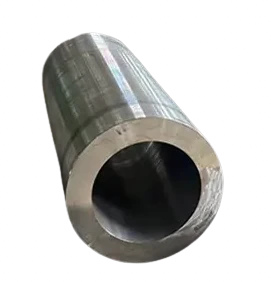
Sleeves and bushings
Seamless sleeves from 100 to 1,500 mm outside diameter — pierced and drawn rather than bored from solid.
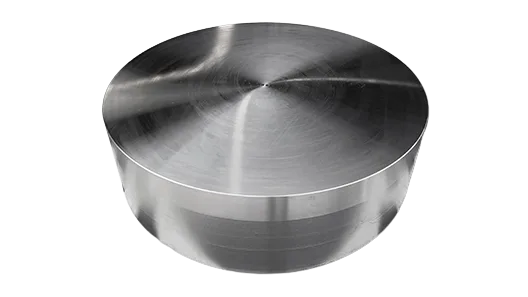
Gear blanks
Forged blanks for gears and gear rims up to 3,000 mm — with grain flow that carries right into the tooth root.
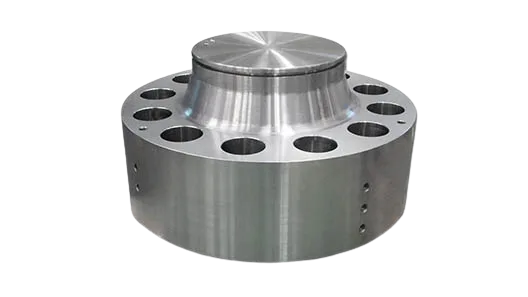
Special flanges
Forged flanges outside the standard — DN 15 to DN 4000, PN 6 to PN 400, single pieces included.
Frequently asked questions
Which forgings does INTEG supply?
Shafts and drive shafts, forged blocks, seamless rolled rings, sleeves and bushings, gear blanks and special or vessel flanges. The range runs from 20 kg to 50 tonnes per piece — as-forged, pre-machined or ready to install.
What is the difference between open-die and closed-die forging?
In open-die forging the material is formed step by step between simple tools — ideal for large one-offs and small batches, because there are no tooling costs. In closed-die forging the material flows into a die; this pays off from medium quantities upwards and produces near-net-shape parts with far less machining.
What is the minimum quantity worth enquiring about?
Single pieces are fine — a large share of our open-die forgings runs in quantities of one to ten. For closed-die parts the die cost typically amortises from a few hundred pieces; we show you the exact break-even in the quotation.
What are the lead times for forgings?
Pre-machined, allow roughly 8 weeks for blocks and discs, 6 to 8 weeks for rings and 10 to 12 weeks for shafts. Rings above 4 tonnes run 12 to 14 weeks. Material availability, piece weight, heat treatment and the extent of testing all move these figures. Binding dates come with the quotation.
Which certificates do I receive?
As standard an inspection certificate 3.1 to EN 10204 with heat analysis, mechanical properties and test results. 3.2 inspections with an external body are available. INTEG is ISO 9001 certified.
Which grades do you hold in stock?
To shorten lead times we hold the common grades as stock material: most carbon steels, 1.4301, 1.4307, 1.4401 and 1.4404, pressure vessel steels, LF2 and 42CrMo4. If your grade is among them, the procurement time for the raw material disappears and the lead time shortens accordingly. For recurring parts we can buy the blanks ahead of demand and finish-machine them on call-off, which brings the lead time for a finished part down to a few weeks.
Request a quote for Forgings
Send us your drawing or specification. You get feedback on feasibility, material selection and an indicative price — from engineers, not from a call centre.
Send enquiry