Castings up to 35 tonnes
Sand casting, investment casting and permanent mould casting from audited foundries — from pattern equipment to machined part.
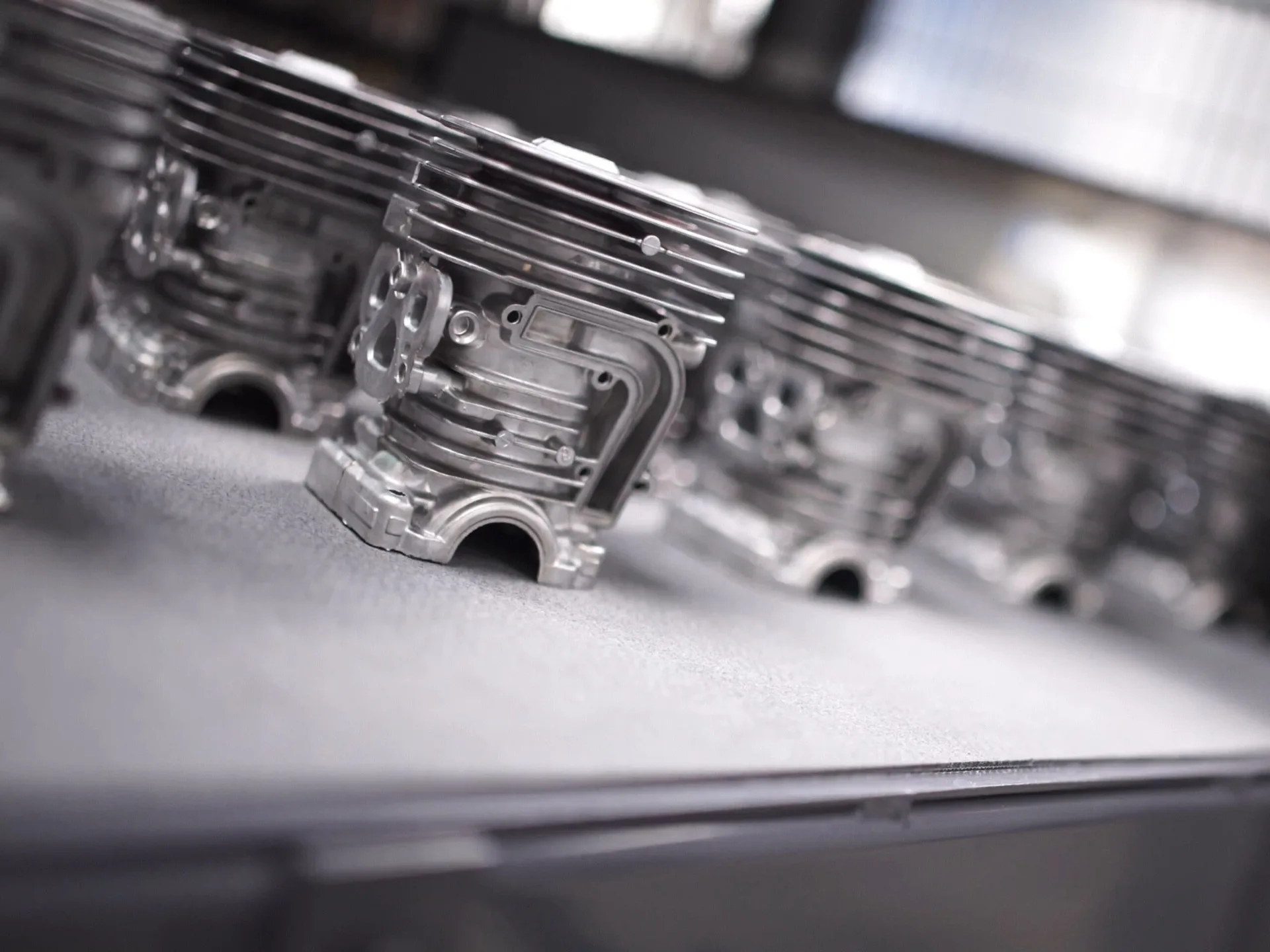
Casting is the right process wherever the geometry is too complex to forge: cavities, openings, branched passages and organically shaped housings are produced in a single step. Quality is decided by pattern making, feeder design and solidification simulation — that is what separates a casting that is sound from one that shows up on the X-ray.
INTEG supplies castings from 0.1 kg to 35 tonnes from qualified foundries in Europe and Asia. We choose the process according to your requirements for tolerance, surface and quantity: investment casting for small, complex and dimensionally accurate parts, sand casting for large components and small batches. Pattern equipment remains your property and is tracked in our documentation.
Technical data
| Piece weight | 0.1 kg – 35 t |
|---|---|
| Processes | Sand casting, investment casting, permanent mould casting, die casting |
| Materials | Grey iron, ductile iron, cast steel, stainless steel, non-ferrous alloys |
| Tolerances | CT5 – CT12 to ISO 8062, depending on process |
| Patterns | Wood, plastic and metal patterns; customer property |
| Testing | X-ray, UT, MT, PT, spectrographic analysis |
| Certificates | EN 10204 3.1, 3.2 on request |
These are typical manufacturing ranges within our supplier network. Larger dimensions and special materials on request — send us your drawing.
Materials
- EN-GJL-250 (grey iron)
- EN-GJS-400-15 (ductile iron)
- GS-52 / GE240
- GX5CrNiMo19-11-2 (1.4408)
- 1.4308 / CF8
- Aluminium and copper alloys
Manufacturing and quality assurance
- Process and material selection based on geometry, quantity, tolerance and leak-tightness requirements.
- Pattern making and feeder layout, with solidification simulation before the first pour on demanding parts.
- First article inspection with dimensional report and material verification before series release.
- Non-destructive testing as agreed: X-ray for internal defects, MT and PT for surface indications.
- Machining, coating and pressure testing on request — you receive the casting ready to install.
Typical applications
- Pump and valve housings
- Machine beds and frames
- Impellers and turbine components
- Wear parts for mining and cement
- Housings for gearboxes and drives
- Process engineering components
Frequently asked questions
Which casting processes does INTEG offer?
Sand casting for large components and small batches, investment casting for small, complex and dimensionally accurate parts, plus permanent mould and die casting for light alloy series parts. Which is cheapest depends on quantity, tolerances and wall thickness — we cost the alternatives against each other.
Who owns the pattern equipment?
Patterns paid for by the customer remain the customer's property. We document location and condition and release them on request. That clarity is one reason customers bundle procurement with us rather than placing orders directly with foundries.
How do you ensure castings are sound?
Through feeder and gating design, backed by solidification simulation on critical parts, and through X-ray or ultrasonic testing at defined inspection zones. For pressurised components we add pressure and leak testing.
Forging or casting — which is better?
There is no blanket answer. Forging wins under high dynamic load and with simple geometry; casting wins with complex shapes, cavities and higher quantities. Our process comparison covers this in detail.
How long does first article production take?
For new parts including pattern making, typically 10 to 18 weeks to first article, with considerably shorter series lead times afterwards. Where a pattern already exists, pattern making drops out and lead time falls accordingly.
Request a quote for Castings
Send us your drawing or specification. You get feedback on feasibility, material selection and an indicative price — from engineers, not from a call centre.
Send enquiry