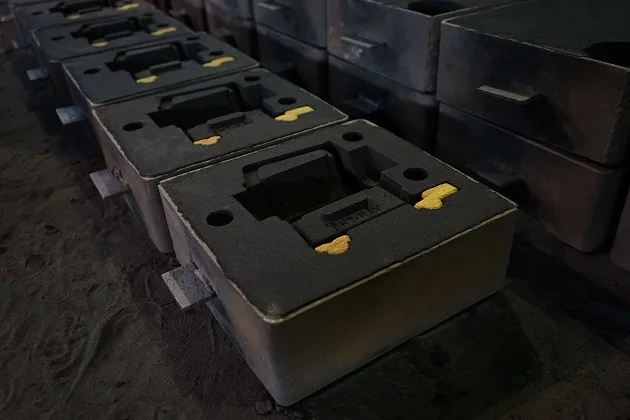
Sand casting is the oldest and most widely used metal casting process in manufacturing. Despite being thousands of years old, it remains the go-to method for producing everything from massive industrial valve bodies to intricate automotive components.
In this comprehensive guide, we'll explore how sand casting works, its various types, advantages, limitations, and why it continues to be the backbone of metal casting foundries worldwide.
What is Sand Casting?
Sand casting is a metal casting process that uses sand as the primary mold material. A pattern (replica of the final part) is pressed into specially prepared sand to create a cavity. Molten metal is then poured into this cavity, where it solidifies into the desired shape. Once cooled, the sand mold is broken away to reveal the cast component.
Why Sand?
Sand is ideal because it's heat-resistant, inexpensive, readily available, and can be reused. Mixed with bonding agents (clay, resin, or chemical binders), it creates a moldable material that holds precise details while withstanding the extreme temperatures of molten metal (up to 1600°C for steel).
The Sand Casting Process: Step by Step
While specific techniques vary, the fundamental sand casting process follows these core steps:
Pattern Creation
A pattern (typically wood, metal, or plastic) is made in the exact shape of the desired part, with allowances for shrinkage and machining. The pattern is usually split into two halves (cope and drag) for easier removal.
Mold Preparation
The pattern is placed in a flask (mold box), and sand mixed with bonding agents is packed around it. For complex parts, cores (separate sand shapes) are inserted to create internal cavities or passages.
Pattern Removal
The pattern is carefully extracted, leaving a precise cavity in the sand. Gating systems (channels for molten metal) and risers (reservoirs to compensate for shrinkage) are carved into the mold.
Mold Assembly
The cope (top half) and drag (bottom half) are assembled together, with cores positioned if needed. The mold is clamped or weighted to prevent separation during pouring.
Metal Pouring
Molten metal is poured through the gating system into the mold cavity. The temperature must be carefully controlled—too hot causes defects, too cold results in incomplete filling. Pouring speed is critical to prevent turbulence and gas entrapment.
Cooling and Shakeout
The casting is allowed to cool and solidify. Cooling time depends on the size and material—small parts may cool in minutes, large steel castings can take hours or days. Once cooled, the sand mold is broken away (shakeout), and the casting is cleaned, gates/risers are removed, and final finishing begins.
Types of Sand Casting
Green Sand Casting
The most common method, using sand mixed with clay and water. 'Green' refers to the moisture content, not the color. The mold is used immediately after preparation without baking or curing.
- Most economical—sand is reusable after simple reconditioning
- Fast mold production for high-volume manufacturing
- Suitable for most metals including iron, steel, aluminum, bronze
Resin Sand Casting (Shell Molding)
Sand coated with thermosetting resin is heated against a metal pattern, forming a thin, hard shell. Multiple shells are assembled to create the mold.
- Excellent surface finish and dimensional accuracy
- Thinner mold walls allow faster cooling and higher production rates
- Good for medium to high-volume production of smaller parts
No-Bake Sand Casting
Sand mixed with chemical binders (typically furan or phenolic resins) that harden at room temperature through chemical reaction. No heating or baking required.
- Superior dimensional accuracy compared to green sand
- Better surface finish with fewer defects
- Ideal for large castings and low to medium production volumes
Advantages of Sand Casting
✓ Size Flexibility
Can produce parts from a few grams to over 200 tons—virtually no size limitation. Large industrial valve bodies, pump housings, and machine bases are commonly sand cast.
✓ Material Versatility
Works with nearly all metals: carbon steel, stainless steel, cast iron, aluminum, bronze, brass, and even exotic alloys like Inconel or titanium.
✓ Complex Geometries
Can create intricate external shapes, internal passages, and cavities impossible or extremely expensive to machine. Cores allow complex internal features like cooling channels in engine blocks.
✓ Cost-Effective for Low Volumes
No expensive permanent tooling required. Pattern costs are relatively low, making sand casting economical even for one-off or small production runs (1-100 pieces).
✓ Rapid Prototyping
Patterns can be quickly produced (wood patterns in days, 3D-printed patterns in hours), allowing fast design iterations and functional testing.
✓ Design Freedom
Easy to modify designs by altering patterns—no need for expensive die rework. Allows optimization through trial and error without major investment.
Limitations and Challenges
While versatile, sand casting has inherent constraints that designers and engineers must consider:
- Surface Finish: Rougher than forging or investment casting (Ra 6-25 µm typical). Requires machining for critical surfaces.
- Dimensional Tolerances: Lower accuracy than precision processes. Typical tolerances ±0.5-1.5mm for small parts, ±3-5mm for large castings.
- Porosity Risk: Gas entrapment and shrinkage can create internal voids if gating design, pouring technique, or cooling control are inadequate.
- Material Waste: Gates, risers, and flash must be removed and recycled. Typically 20-40% excess material for gating systems.
- Labor Intensive: Green sand molding requires skilled labor for consistent quality. Pattern making and mold preparation are time-consuming for complex parts.
Industries and Applications
Sand casting serves virtually every industrial sector. Common applications include:
| Industry | Typical Components | Common Materials |
|---|---|---|
| Oil & Gas | Valve bodies, pump housings, wellhead equipment, flanges | Carbon steel, stainless steel (316, 410), duplex steel |
| Automotive | Engine blocks, cylinder heads, transmission cases, differential housings | Gray iron, ductile iron, aluminum (A356, 319) |
| Heavy Equipment | Gearbox housings, counterweights, frames, brackets | Cast steel, ductile iron, SG iron |
| Power Generation | Turbine casings, impeller housings, bearing supports | Cast steel (WCB), stainless steel, high-alloy steel |
| Marine | Propellers, rudders, anchor chains, hull fittings | Bronze (NAB, Manganese Bronze), stainless steel |
Materials for Sand Casting
Sand casting accommodates a wide range of alloys, each with specific melting points, pouring temperatures, and solidification characteristics:
Cast Steel
Carbon steel (WCB, WCC) and alloy steel provide excellent strength and toughness. Melting point 1425-1540°C. Requires careful gating design to prevent shrinkage defects. Used for high-pressure valves, pump components, and structural parts.
Cast Iron
Gray iron (GG25, GG30) offers excellent damping, machinability, and wear resistance. Ductile iron (GGG40, GGG50) provides higher strength and ductility. Lower melting point (1150-1200°C) makes casting easier. Widely used in automotive and machine bases.
Aluminum Alloys
Lightweight with good corrosion resistance. A356 and 319 are most common for sand casting. Lower melting point (660-750°C) simplifies process but requires careful mold design to prevent defects. Used in aerospace, automotive, and consumer products.
Quality Control and Inspection
Ensuring casting quality requires multiple inspection stages:
Visual Inspection
Surface examination for cracks, porosity, inclusions, and dimensional accuracy. First-line check performed on all castings.
Non-Destructive Testing (NDT)
Radiographic (X-ray), ultrasonic, or magnetic particle testing to detect internal defects without damaging the part. Critical for pressure-containing or safety components.
Dimensional Verification
CMM (Coordinate Measuring Machine) or manual gauging to verify critical dimensions meet drawing specifications.
Mechanical Testing
Tensile testing, hardness testing, and impact testing on test coupons cast with production parts to verify material properties.
Conclusion: The Enduring Value of Sand Casting
Sand casting remains indispensable in modern manufacturing because of its unmatched versatility, size capability, and cost-effectiveness for low to medium production volumes. While newer processes like investment casting offer superior precision and forging provides better mechanical properties, sand casting excels where complex shapes, large sizes, and economic viability intersect.
Key Takeaways
- ✓ Sand casting is the most versatile casting process—handles any size, nearly any metal, and complex geometries
- ✓ Green sand casting offers the lowest cost per part for medium to high volumes
- ✓ No-bake and resin sand methods provide better accuracy when needed
- ✓ Surface finish and tolerances are lower than forging or investment casting—plan for machining allowances
- ✓ Quality control through NDT and inspection is critical for critical applications
Need Expert Guidance on Sand Casting?
INTEG works with specialized sand casting foundries across Europe and Asia. Whether you need large valve bodies, complex housings, or custom one-off components, our technical team can guide you through material selection, design optimization, and supplier selection.
Discuss Your Casting Project